

Oshirado in Tōno City, Japan
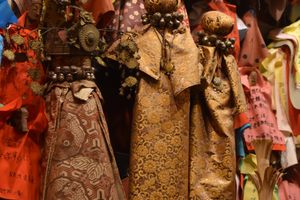
Even in Japan, home of the Eight Million Gods, Oshira-sama is an oddity. A tutelary deity of silk, horses, and agriculture, the god continues to be worshipped mainly in rural villages in the northern regions and is typically represented by a pair of mulberry-wood dolls wearing rag hoods.
According to the standard myth, Oshira-sama is a pair of male and female deities, the former often taking the form of a horse. Legend has it that, once upon a time, a farmer's daughter loved her horse so much that she married it, which shocked and angered her father. He killed the horse, and when his daughter wouldn't stop holding on to the corpse and crying, he went on to cut off its head. The daughter then hopped onto the horse's head and flew away, becoming the god Oshira-sama in heaven.
Folk customs surrounding Oshira-sama remain largely a mystery even today, as most communities refuse to disclose details about their worship. A few taboos are known, however, including offerings of animal meat and eggs. They are also very jealous, and failure to appease them, especially the worship of other deities, is said to bring a life-threatening curse to the family.
Public shrines or effigies of Oshira-sama are rare to say the least, but those curious can find a thousand Oshira-sama idols collected from all across the region at the Oshirado pavilion at Denshoen, an open-air folk museum dedicated to the traditions of the rural villages of Tono.
The pavilion is covered by row after row of rustic effigies hanging on the walls, all wearing pieces of colorful cloth with wishes and prayers written on them. Though many of the figures are human-shaped, visitors may also notice horse-headed idols here and there, following the folk tale. At the center of the room stands an old mulberry tree, emanating a sort of strange sanctity.
Visitors can pay an extra fee for a piece of cloth, write a wish on it and put it on one of the Oshira-sama effigies, but don't forget to pay a good amount of respect to them so as not to incite their wrath.