

V8s making shock comeback as luxury base chase emotion
 EV aversion and softening legislation have put big, booming engines back on the agenda
The V8 is making a shock comeback, thanks to a green light from US regulators and foot-dragging among high-end car buyers.
Stellantis, Lotus and Mercedes-Benz are among those reinstalling V8s into their line-up, and new Chinese car makers are working on their first-ever versions.
Meanwhile, the likes of BMW, Ford and General Motors are reaffirming their support for the engine, investing in new developments in response to customer demand.
V8s are a long way from being a mainstream power source, as they were for generations of primarily American cars, but against all odds they have survived the electric onslaught.
Many EVs easily deliver the punch of a V8, but without the harshness – and emissions – of combustion power. Yet, crucially, they lack the character that many buyers have come to love.
"In the luxury segment, customers simply enjoy the thrill of driving a car with powerful big engines," said Lotus CEO Feng Qingfeng. "They somehow just don't like the smoothness of EVs."
Lotus is leaning on the resources of owner Geely, the Chinese giant that is investing in V8 and V6 powerplants via its part-ownership of engine builder Horse.
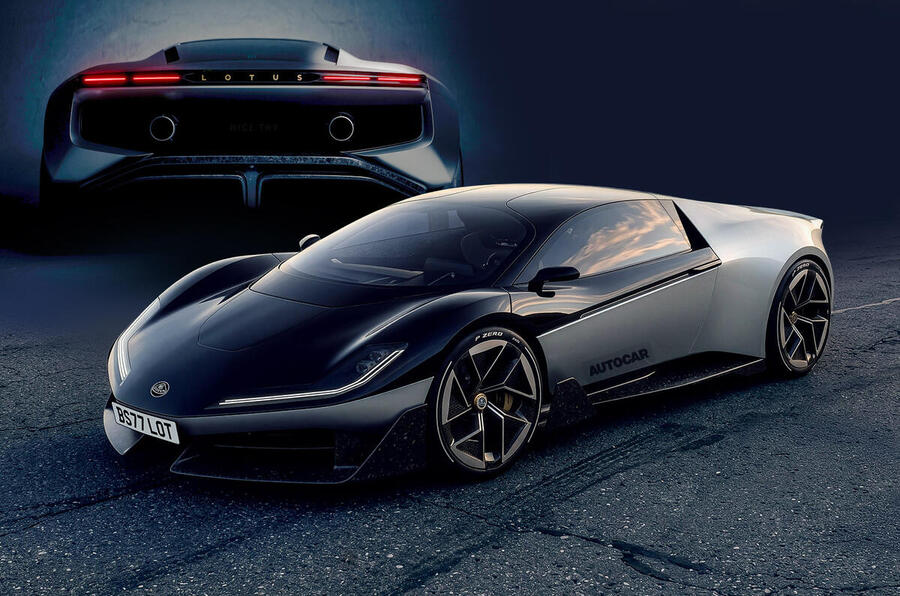
As well as powering a new Lotus supercar codenamed Esprit (pictured in Autocar's artist impression above), the engine will go into an off-roader from the Geely stable, according to Feng (who didn't name the brand). It is also tipped for an 'M5-killer' from Lynk&Co.
The arrival of a new V8 from Horse opens up the choice for smaller manufacturers, which have turned to the likes of BMW (such as Land Rover for the Defender Octa) and Mercedes-Benz (such as Aston Martin for its models).
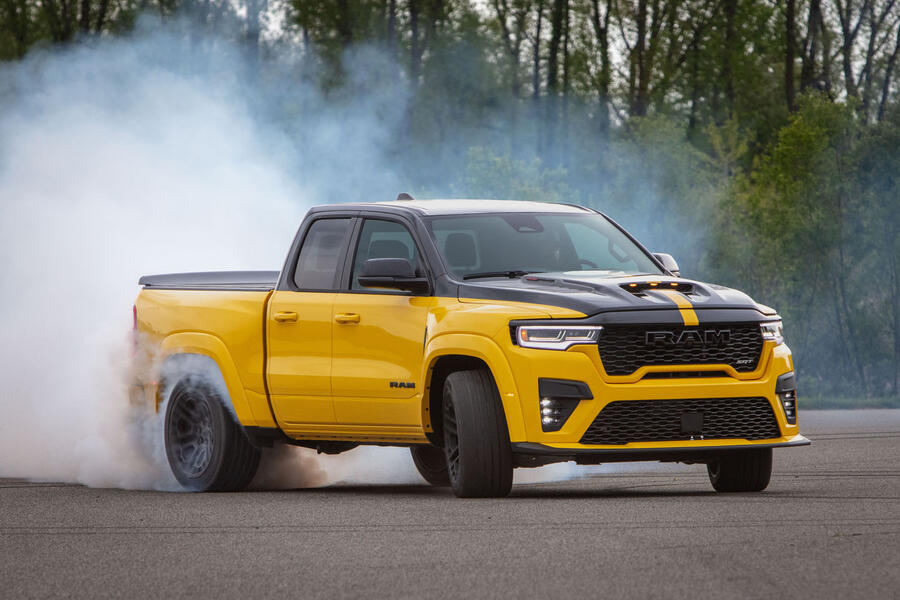
Stellantis, meanwhile, is getting a sales bump in the US from new CEO Antonio Filosa's decision to bring back the Hemi V8 for its Ram pick-up trucks.
Previous boss Carlos Tavares canned the Hemi in favour of the lower-emission Hurricane straight six that anticipated tougher emissions targets, but was disliked by a section of pick-up buyers. The Hemi represented 40% of Ram orders in the first quarter, according to Filosa.
"To have the V8 Herni engine keep accelerating will be very good for volume, will be very good for mix and, most of all, will be very good for profit," Filosa told investors on the company's first quarter earnings call. Stellantis wants to double down on muscle cars in the US using the SRT performance badge, with the V8 at their heart. The decision was a no-brainer.
"Bringing back the Hemi V8 engine gained a lot of attention and sent a clear message that Stellantis is listening to its customers and dealers who resented being forced to take the Hurricane twin-turbo straight-six engine," said Stephen Reitman, analyst at banking firm Bernstein.
The V8's return can be traced back to US president Donald Trump's decision to rip up emissions legislation imposed on car makers, cancelling penalties for missing CO₂ targets. "Stellantis no longer has to buy greenhouse gas credits to offset the carbon footprint of the Hemi V8," said Reitman. "The maths for bringing back the Hemi works."
Filosa pushed back on suggestions that buyers would baulk at fuel bills 40% higher than those of the Hurricane-engine models and three times those for plug-in hybrids in a period when the Iran war is hiking fuel prices. "In the US, the oil price pressure is lower than in Europe," he said.
The European V8, for a long time the preserve of top-end premium buyers, had been in decline in favour of electrified equivalents in response to CO₂ penalties. But premium brands have the widest global reach, so the combination of buyer reluctance to go electric at the top end along with America's V8 amnesty has tipped their hand.
For example, Mercedes' AMG performance arm has brought back the V8 after getting a lukewarm reception to the C63 four-cylinder PHEV, despite its 671bhp output. A new smoother, lower-emission V8 is going into a range of new models, including the GLE and GLS. Like all European premium marques, Mercedes is leaning more on the US market after losing share in China and that requires having a V8 at the top end.
Forner BMW CEO Oliver Zipse highlighted its V8 line-up as evidence of the company's rich variety in the face of what he saw as the "monoculture" within BMW's Chinese rivals, demonstrated at this year's Beijing motor show. He said: "You saw all drivetrains: you saw V8, you saw the Neue Klasse, fully electric, you saw smaller cars, you saw the new 7 Series, you saw our focus on hydrogen. The full breadth of a premium player you saw that."
Despite Zipse's comment, the Chinese are also getting into V8s – not just Geely but also Great Wall Motor, which showcased a 4.0-litre turbocharged V8 at this year's CES tech event. High-end models from GWM's Tank off-road brand are likely recipients, as is its forthcoming sports car.
Having a V8 is still a sign of status, Sam Fiorani, head of global vehicle forecasting at AutoForecast Solutions, told Autocar. "Outside of North America, V8 engines mark the arrival of a prestige model, announcing that a model or brand plans to take on the luxury or exotic market, he said.
There's a political angle too. "For a Chinese manufacturer, creating a model that appeals to American tastes can put pressure on the dealers and legislators to open up American access to such models," said Fiorani. "It is unlikely to work by itself, but it is part of a larger plan to create a buzz for Chinese vehicles."
Another possible reason for Chinese interest lies on the track. "They want to get into racing. That's the next cred they're chasing," Tu Le, founder of consultant Sino Auto Insights, told Autocar.